There is a moment each spring when the world reopens its eyes. Buds split, petals loosen, and for a brief window the landscape remembers its own sweetness. People have always paid attention to this. Long before we had the language of neurotransmitters or stress hormones, we had the language of blooming, unfolding, and the quiet courage required to show oneself to the world.
That older way of knowing is where flower essences belong.
Flower essences are not herbal medicines in the commonly understood sense. They do not move the bowels, calm coughs, or correct digestion. Their work takes place in the subtler chambers of the human experience: where emotions form, where identity trembles, where the soul negotiates the next season of its unfolding. Flowers help people remember how to soften, how to grieve, how to take up space, how to trust, how to speak, how to begin again. They do this without force and without seduction. They simply hold a field and invite the person to meet themselves there.
What are flower essences?
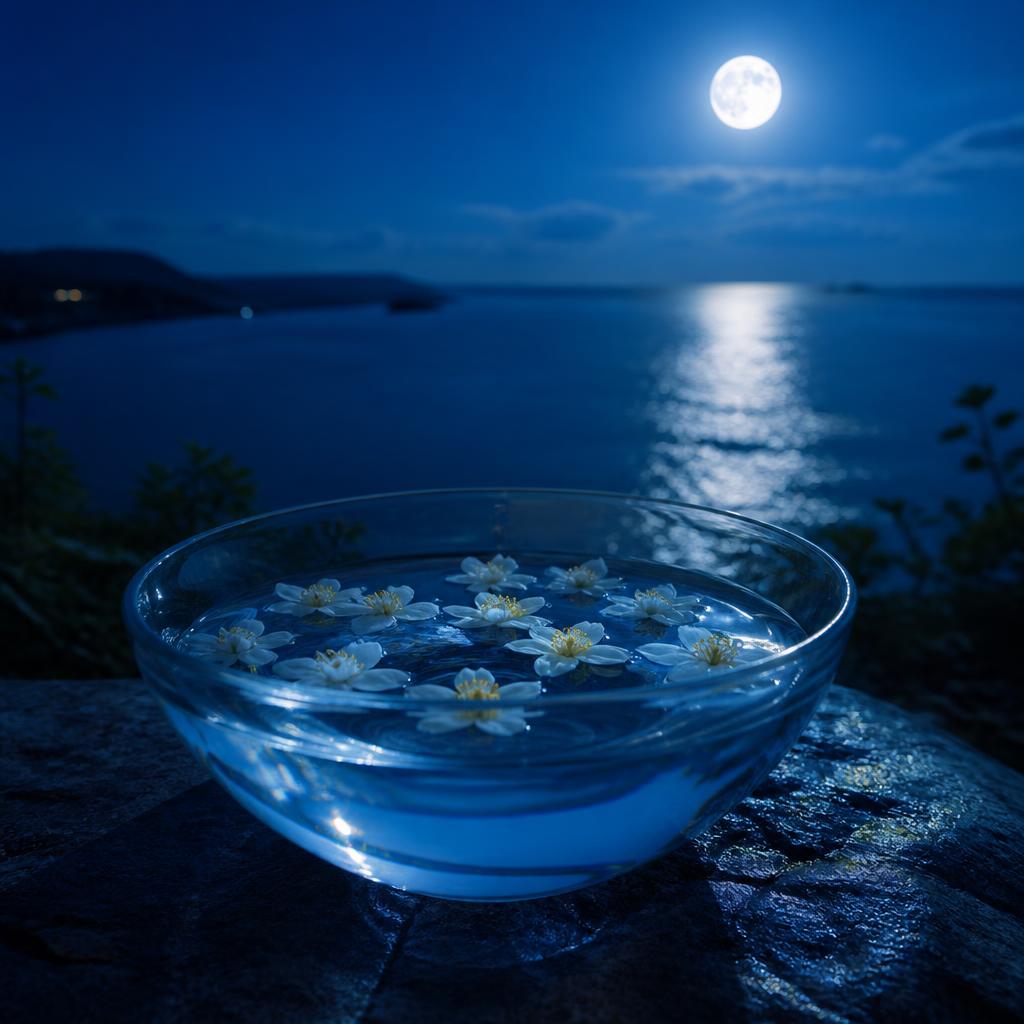
A flower essence is a preparation made from fresh blossoms in pure water, infused under sun or through other elemental means, and preserved with alcohol. When taken in drops, the essence carries the flower's imprint into the emotional and energetic body.
If you imagine a plant having three bodies, it becomes easier to understand:
- The physical body, with roots, stems, chemical constituents, and herbal actions
- The aromatic body, influencing the breath and nervous system
- The subtle body, where the plant's consciousness, temperament, and medicine pattern reside
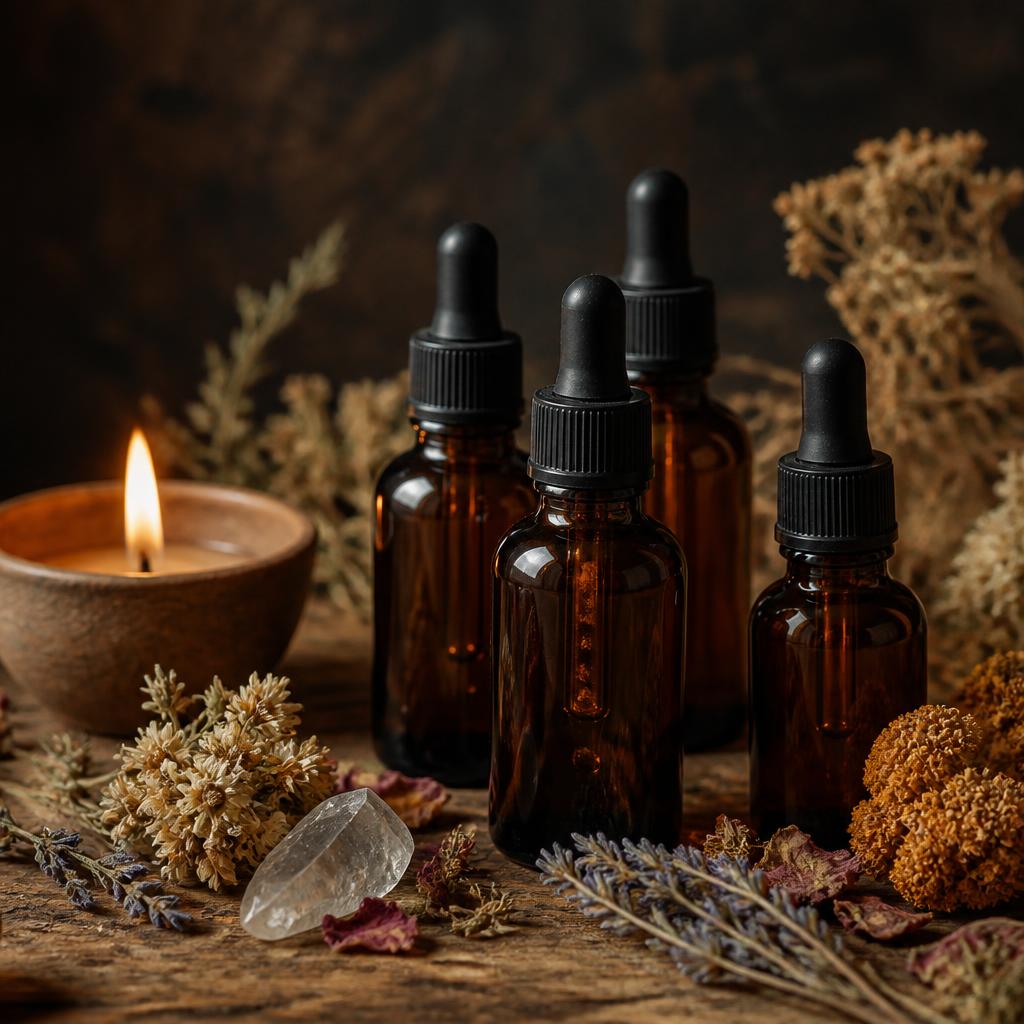
Herbal tinctures speak to the physical body. Essential oils speak to the aromatic body. Flower essences speak to the subtle body. They do not override or numb emotional states. They help unveil them; gently, steadily, in a way that feels like remembering rather than performing.
A lineage older than it appears
Dr. Edward Bach gave the Western world a clean and replicable system of essences in the 1930s, but the practice itself is much older. Cultures around the world have used dew, flower waters, vapor, and sun infused petals for spiritual, initiatory, and emotional healing. In Druidic and other ancestral plant traditions, the flower was regarded as the soul signature of the plant: the part that held its teaching and temperament.
Even today, you can witness the teaching if you pay attention. The impatience of Impatiens. The steadfast courage of Holly. The expansive heart winging of Wild Rose. Plants reveal themselves through gesture long before they reveal themselves through chemistry.
How flower essences work
Essences operate through resonance rather than force. Every emotional state (fear, grief, anger, withdrawal, overwhelm, hope, devotion) has a vibrational architecture to it. Flowers hold archetypal versions of those architectures. When the two meet, the person is reminded of a healthier expression of that pattern.
Fear moves differently when there is courage present in the field. Grief metabolizes differently when beauty is allowed to stay near it.
This is why flower essences are often used for:
- Emotional congestion or overwhelm
- Transitions, initiations, or rites of passage
- Creative blockages
- Grief and heartbreak
- Self expression and visibility
- Regulation of inner pace and pressure
- Soul growth or identity shifts
- Trauma integration (gentle, non invasive)
- Reconnecting with purpose or desire
Children, animals, and even plants respond quickly to essences, which tells us the mechanism is not suggestion or belief. Something deeper is at work.
How to choose an essence
Choosing a flower essence is an act of listening. People are not machines with symptoms to be suppressed; they are beings undergoing processes. A good essence asks: what is really happening here? Is the person afraid of being seen? Unable to rest? Burning out in devotion? Dissociating from overwhelm? Mourning a life they have not yet lived? Standing at the threshold of becoming?
Different practitioners choose through different portals: emotional presentation, personality and temperament, developmental stage, intuitive resonance, doctrine of signatures, lunar or seasonal currents, initiatory arcs, dreams or symbols. There is no one correct doorway. The flower will meet the person where they are.
Why flowers, and why now
We are living in a time of acceleration. Information outpaces integration. People burn through seasons without noticing the teachings within them. The nervous system is constantly negotiating threat, performance, belonging, and survival. We are starved for pace, for meaning, and for beauty that is not ornamental but medicinal.
Flowers are masters of timing, presence, and revelation. They know how to open without apology, how to attract without coercion, how to die without drama, and how to return again and again. When a person is working with flower essences, they often begin to experience a reweaving of emotional coherence, an increase in self permission, a slower pace within the body, an ability to name what they actually feel, a softening of old protective structures, and a return to desire, creativity, or devotion. This is not fantasy or escapism. It is re-humanization.
The medicine of the blossoming soul
If herbal medicine tends to the body and ritual tends to the spirit, then flower essences tend to the bridge between them; the place where feelings, meanings, wounds, and longings animate our lives. To work with flower essences is to participate in the art of becoming. It is to remember that healing is not only about relief; it is about coherence. It is about aligning the inner and outer worlds so life can move through us without distortion.
Flower essences are not here to make us perfect. They are here to make us whole.